Farewell, Sean Callaway
Sean Callaway was a true advocate for low-income students. He was one of the best we had, and he brought out the best in us.

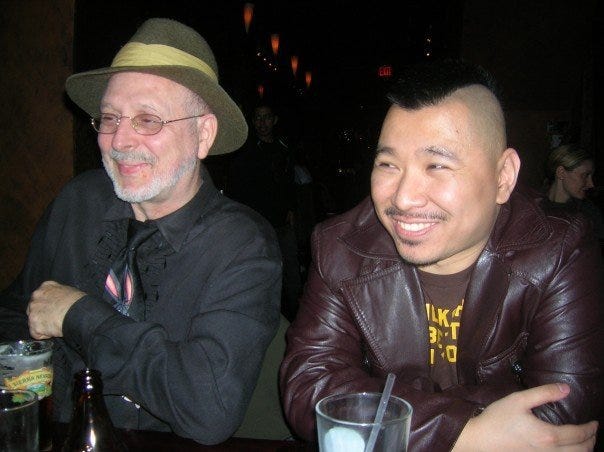
I met Sean Callaway in the spring of 1996, during my admissions interview for Pace University’s Upward Bound Program. My guidance counselor at Kingsborough High School, Mr. Shapiro, had stopped me in the hallway one day and handed me a flier. Pace Upward Bound (UB) was a federally funded academic program offering free, year-round college counseling and academic support for first-generation, low-income students attending underperforming high schools in Brooklyn, New York. Kingsborough wasn’t one of those schools, but Pace UB was scrambling to fill its inaugural summer class and had reached out to guidance counselors across New York City. I listened to Mr. Shapiro’s pitch, glanced at the flier, and thought: cool, they have a computer lab. I didn’t care much about the college counseling. I had a 90 average and knew I was going to college. I just wanted to be unshackled from the bandwidth limitations of AOL’s home dial-up internet, and have access to internet that didn’t tie up my family’s landline phone.
I was 14, finishing my sophomore year, when I met Mr. Callaway. He was 53, and the Director of College Placement for Pace University’s Center for Urban Education. What I remember most about that meeting is what he said at the end of my interview: “You’re arrogant — but that’s okay.”
Mr. Callaway was not the first person to call me arrogant. But he was one of the first to say it in a way that didn’t feel dismissive. It felt like an observation. During the brief pause between “you’re arrogant” and “but that’s okay,” I started composing a response. I was going to remind him that I had skipped freshman year of high school, making me the youngest and smallest student in my class; that on my first day of public school I’d been placed in the ESL class despite English being my only language; that I’d been bullied through most of elementary school and had learned that if I walked with my head down and shoulders slumped, I became a target. In my under-resourced junior high school, if I didn’t speak up for myself with teachers and administrators, I would be ignored and cast aside. I had already shared all of this during the interview. I was about to add that I came from places where people were constantly trying to put me in my place — so yes, I had learned to be arrogant. But before I could open my mouth, Mr. Callaway spoke again. His “but that’s okay” told me that while I had been composing my defense, he had been taking in everything I’d shared. It felt like: I see you.
Sean Callaway’s life work was life seeing students like me. Over a college counseling career that spanned from the mid-1990s until his death on March 6, 2026, he worked with hundreds of low-income, first-generation students. The seeing wasn’t a superpower he was born with — it was a set of skills he deliberately developed, because he was Irish Catholic and the students and families he worked with were not.
The irony of Mr. Callaway being Pace UB’s Director of College Placement was that he had flunked out of Notre Dame and didn’t finish his undergraduate degree until his late thirties. He didn’t hide this. On the first day of College Prep 101, he told us he’d loved Notre Dame and was intensely proud of the varsity rugby jacket he wore while mopping the floor of a bar after washing out. His first lesson: higher education isn’t romance. The relationship between us and college admissions offices was transactional — we bring transcripts, résumés, and personal statements proving we can handle the work; they offer us money so we can afford to enroll. “There is no romance without finance,” he said. We heard that phrase dozens of times, along with other Callaway classics like “it’s not fair, but it’s real,” as he set about teaching us the business of college admissions.
He taught us that elite colleges cultivate low yield rates — they spend money convincing as many students as possible to apply so they can deny them, manufacturing an aura of exclusivity. He taught us that an “admit-deny” was when a school accepts you and then offers you a financial aid package so inadequate they know you can’t enroll. He taught us to research colleges the way a stockbroker analyzes stocks: pull data from multiple sources, read between the lines, synthesize everything, and present your findings to your classmates — who were making their own decisions based on your work. “Is this a suitcase school?” “What’s the student-to-faculty ratio?” “How’s the dining hall food?” “Where do students get their hair done?” “What’s the loan default rate?” If you missed a deadline or submitted work below his standards, Mr. Callaway deducted money from your weekly stipend. Some students didn’t collect a stipend for the entire summer.
For many of us, this was the first time anyone had assigned research that went beyond a grade school book report. Mr. Callaway understood that a number of his students came from schools that had failed them by keeping expectations low. He expected you to respond to his feedback, ask for help, and put in whatever time was necessary to close the gap. If you needed to stay late, he’d keep the office open and work in his own office while you finished. If you needed to talk through a family situation, he made the space. If you needed help explaining a college decision to your parents, he’d help you have that conversation. Working with us regularly pulled him away from his own family. It must have been very hard for them to share him with us.
Mr. Callaway gained our trust by approaching us with both respect and candor, and by revealing facets of his own life. He bragged freely about his eldest son — “the Boy Genius” — who was thriving at Case Western Reserve’s computer engineering program while playing on their nationally ranked ultimate frisbee team. He often brought his youngest children, whom he was homeschooling, to work. He asked us to tell our stories in our personal statements, and he shared his. Between flunking out of Notre Dame and earning his degree, he had hitchhiked up and down the West Coast, spent time living with monks, was arrested by the FBI at an antiwar protest, experienced homelessness, and drove a delivery truck for the Daily News. He had been pressed into learning the college admissions process in order to help his eldest son navigate it. He turned what he learned into the work of his life.
At the conclusion of that first summer, Pace UB traveled upstate to visit two colleges. At the first school, after a campus tour, we were led into a meeting with an admissions representative — in a hot, windowless, cluttered room that felt like a janitor’s closet. The message was implicit: these kids from Brooklyn will be so bowled over by our beautifully manicured campus that they won’t notice we put them in a broom closet. The rep came ready to share romantic tidbits about sacred halls of learning. We came armed with questions about loan default rates, freshman attrition, and the average financial aid gap. On the bus afterward, Mr. Callaway asked how we felt about being received in a storage closet. We felt disrespected. Over a few months, he had transformed us into savvy consumers — and he could barely suppress a knowing smile as he watched us show them exactly who we were.
The following summer, Mr. Callaway added a new element to College Prep 101: on the first day, he told students to memorize the Gettysburg Address and be prepared to recite it before the class. He believed his students should understand the significance of one of the most important speeches in American history — and that public speaking was a skill they needed to practice and own.
By then I had graduated out of College Prep 101. My summer work centered on building my college list for senior year. I had decided I wanted to study film — partly because I loved movies, and partly, if I’m honest, to prove my parents wrong for thinking it was a mistake. Mr. Callaway’s feedback on my first personal statement draft was blunt: I seemed less interested in film and more fixated on proving everyone wrong. I tried rewriting it, couldn’t, and started over. The new essay was about watching my mother toil in a sweatshop when I was a toddler, what that taught me about our place in society, and my own experiences with discrimination. While other students were finalizing their college lists, I was building a new one — I had decided to apply to liberal arts colleges instead of film schools. Many counselors would have corrected my grammar and left the rest alone. Mr. Callaway challenged me and all of his students to interrogate the premise. He believed that a critical part of his job was helping students figure out what actually fit them — including, when appropriate, steering them toward paths that didn’t involve college at all.
At the end of that summer, I asked Mr. Callaway if I could be his intern. I was heading into senior year and planning to hit the college fair circuit — why not use the opportunity to promote Pace UB and invite admissions reps to meet our students? He agreed and handed me a stack of his business cards. That fall, we persuaded admissions officers from Swarthmore, Bowdoin, and Hobart and William Smith (HWS) to have lunch with Pace UB students.
HWS invited me to campus to compete for their Trustees Scholarship. Afterward, debriefing with Mr. Callaway, I mentioned that I’d been too focused on the competition to form a real impression of the school. He suggested I call the admissions office and ask if I could come back for Multicultural Students Weekend a few weeks later. I called; they said yes. Many of us had been taught, implicitly, that asking for more than what was offered was impolite. Mr. Callaway disabused us of that. Don’t be afraid to ask the right questions.
During our debrief, we also looked through a copy of the HWS student newspaper I’d brought back. The front page carried a story about a study comparing HWS faculty salaries to peer institutions — HWS’s lagged behind, and the administration had committed to raising them. Mr. Callaway and I wondered together: if they’re raising faculty salaries, what happens to the money available for financial aid? “You should ask that question,” he said.
On the last morning of Multicultural Students Weekend, the Dean of Financial Aid held a session for prospective students in the ballroom of a women’s dorm. During the Q&A, I cited the student newspaper article and asked how raising faculty salaries would affect financial aid packages. The Dean paused — he hadn’t expected that kind of question from a prospective student from the inner city. When the session ended, he made a beeline for me, complimented the question, and asked who I was.
“I’m Ben Chan from the Pace University Upward Bound Program.”
All seven Pace UB students who applied to HWS that year were accepted and offered generous financial aid packages. I won one of the 1998 Trustees Scholarships. Mr. Callaway credited me with picking up the paper, reading it, and asking the question. But those are all things he taught us to do. Not one of us had known HWS existed before taking his class. He changed the trajectories of our lives by pushing us to expand our horizons, encouraging us to open doors where people like us weren’t traditionally welcome, and to walk through those doors with our heads up like we belonged.
A couple of months before I graduated from Pace UB, I cursed out an instructor in the hallway after he revealed something I’d shared with him in a private counseling session. I was sent home and told I was expelled. I went straight to Mr. Callaway’s office. He listened, then told me I had two options: accept the expulsion, or appeal to their supervisor down the hall. Up to that point, I had been taught to accept whatever authority figures decided and complain about it afterward. Nobody had ever offered to walk me through advocating for myself against adults. After caucusing with Mr. Callaway, I appealed my expulsion successfully, and was reinstated after agreeing to apologize for my outburst.
That fall, things didn’t go as planned at HWS. It turns out that neither my classmates nor the deans quite knew what to do with an arrogant Chinese kid from Brooklyn who refused to be bullied. Stealing from me didn’t put me in my place. Urinating on my door didn’t put me in my place. Threatening to kill me didn’t put me in my place. Defecating on my door didn’t put me in my place. Yelling “gook” at me didn’t put me in my place. When I corrected them and told them I am a chink not a gook, they yelled “chink” at me- and that didn’t put me in my place. They never convinced me I didn’t belong. I didn’t tell my parents what was happening — there was little they could do from 330 miles away. Outside of a handful of classmates, Mr. Callaway was the only person I fully confided in, and the only adult. He counseled me on how to navigate conversations with the deans. “Short declarative sentences,” he said. “Present the facts without embellishment.” (Somehow, he already seemed to know I was destined for law school.) I am grateful not only for his advice, but for his steady insistence that nothing I had done caused my bullies to target me. It seems like an obvious thing to say. But when it feels like everyone around you — the bullies, the deans, the institution itself — is telling you that you provoked nice boys into becoming racists, having one adult say clearly this is not your fault matters more than it should have to.
When I decided to leave HWS and transfer to Hunter College after my junior year, Mr. Callaway was the only person to whom I explained my full reasoning. A senior with a documented history of harassing and assaulting women had attacked my friend. She fought him off. HWS’s justice tribunal found him guilty and suspended him for the rest of the semester — then reversed course and welcomed him back so he could graduate on schedule. After failing to convince faculty or students to protest, I left. Mr. Callaway felt that walking away from a significant scholarship and losing an academic year of non-transferable credits was too steep a price. I decided that if I let the institution dictate my morality, I’d be setting a precedent I couldn’t live with.
Though he disagreed, Mr. Callaway welcomed me back to New York and into the Pace UB fold as an AmeriCorps volunteer. It was during that time that I finally honored his long-standing request to call him Sean instead of Mr. Callaway. The timing made sense — I was an adult now, and we were colleagues.
On the morning of September 11, 2001, I was preparing to leave my apartment in Brooklyn when the World Trade Center was attacked. We didn’t know it then, but for Sean, working in the shadow of Ground Zero in the months that followed would carry a long and serious cost to his health.
When I graduated from Hunter in 2005, Sean congratulated me for proving him wrong. He invited me to share my story with his current students. Now that I had access to disposable income, our relationship evolved into a friendship. When I mentioned I was looking for somewhere to watch a boxing match because I didn’t have cable at home, he pointed me to the Cigar Inn, his neighborhood cigar shop in the East 70s, which had a lounge. To the regulars there, Sean was “Professor.” I became “Fight Doctor,” for my love of the sweet science. He and I watched Miguel Cotto fight at Madison Square Garden several times, and we were at Yankee Stadium on June 5, 2010 when Cotto fought Yuri Foreman in a ring set up in the middle of the baseball field. I’d stopped going to the Cigar Inn by then — I’d been hired by CompuBox as a statistician for HBO Boxing — and Sean was my guest at the studio several times over the years.
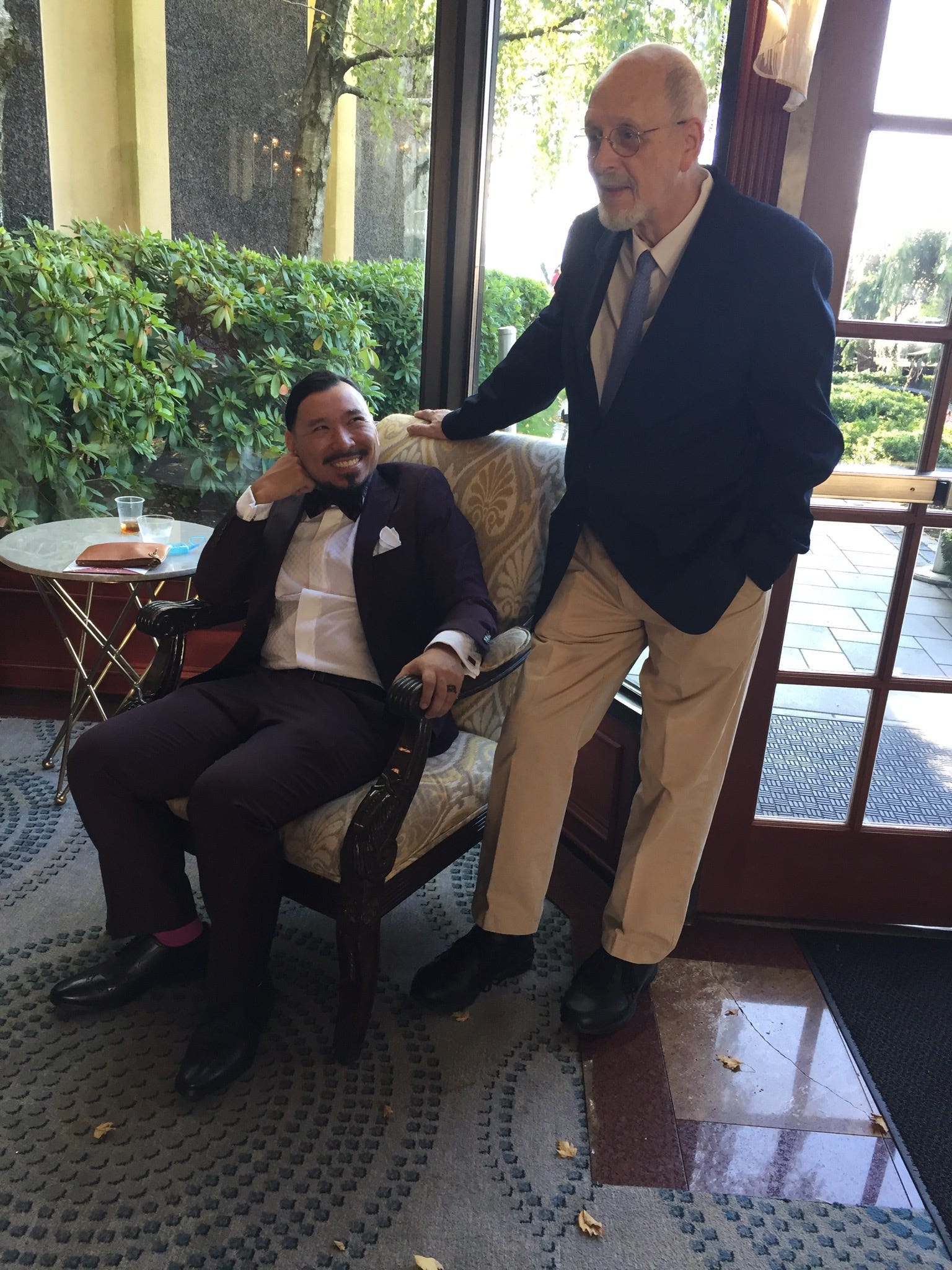
On October 7, 2017, Sean and his wife Beth attended my wedding and danced up a storm.

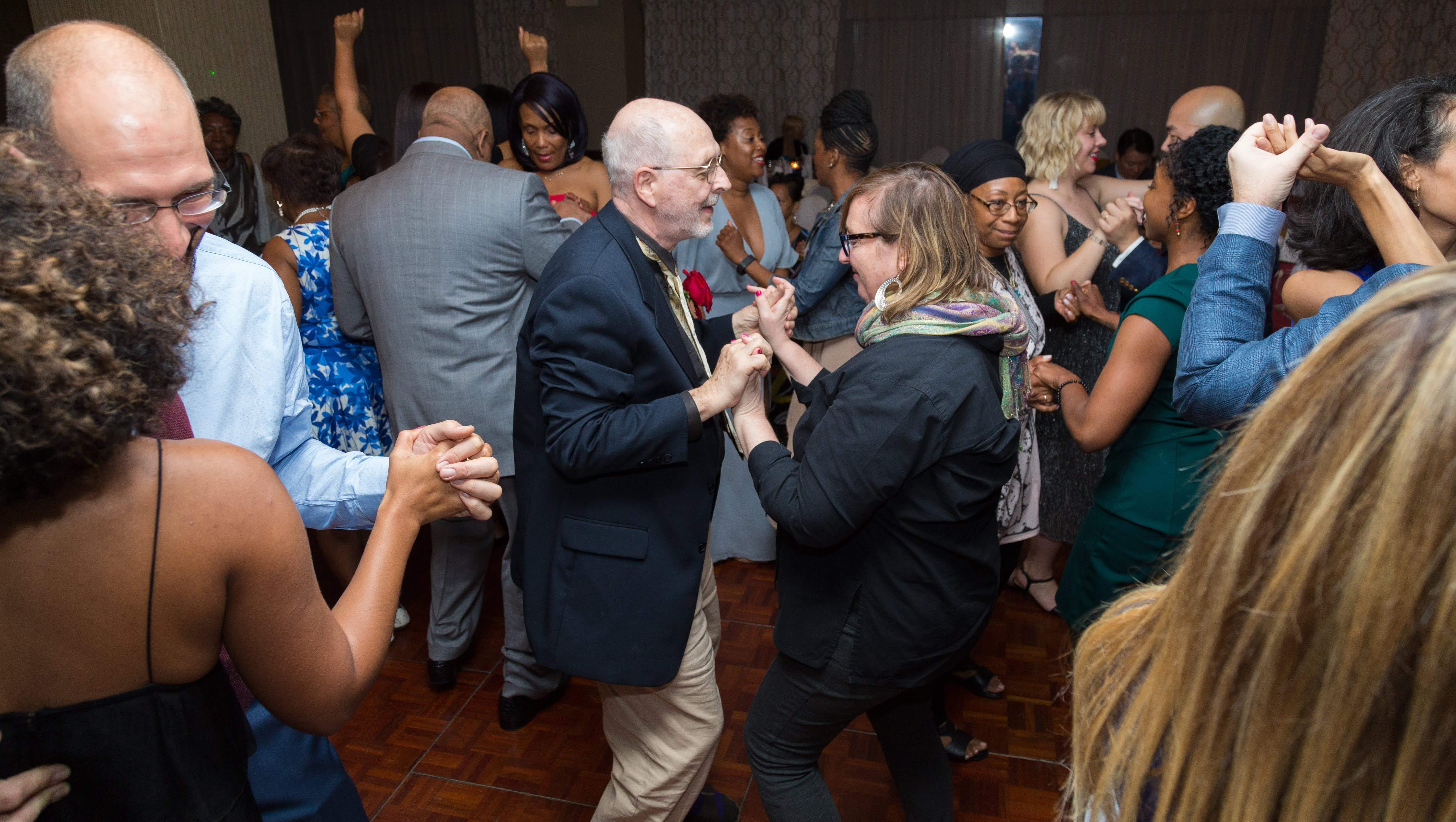
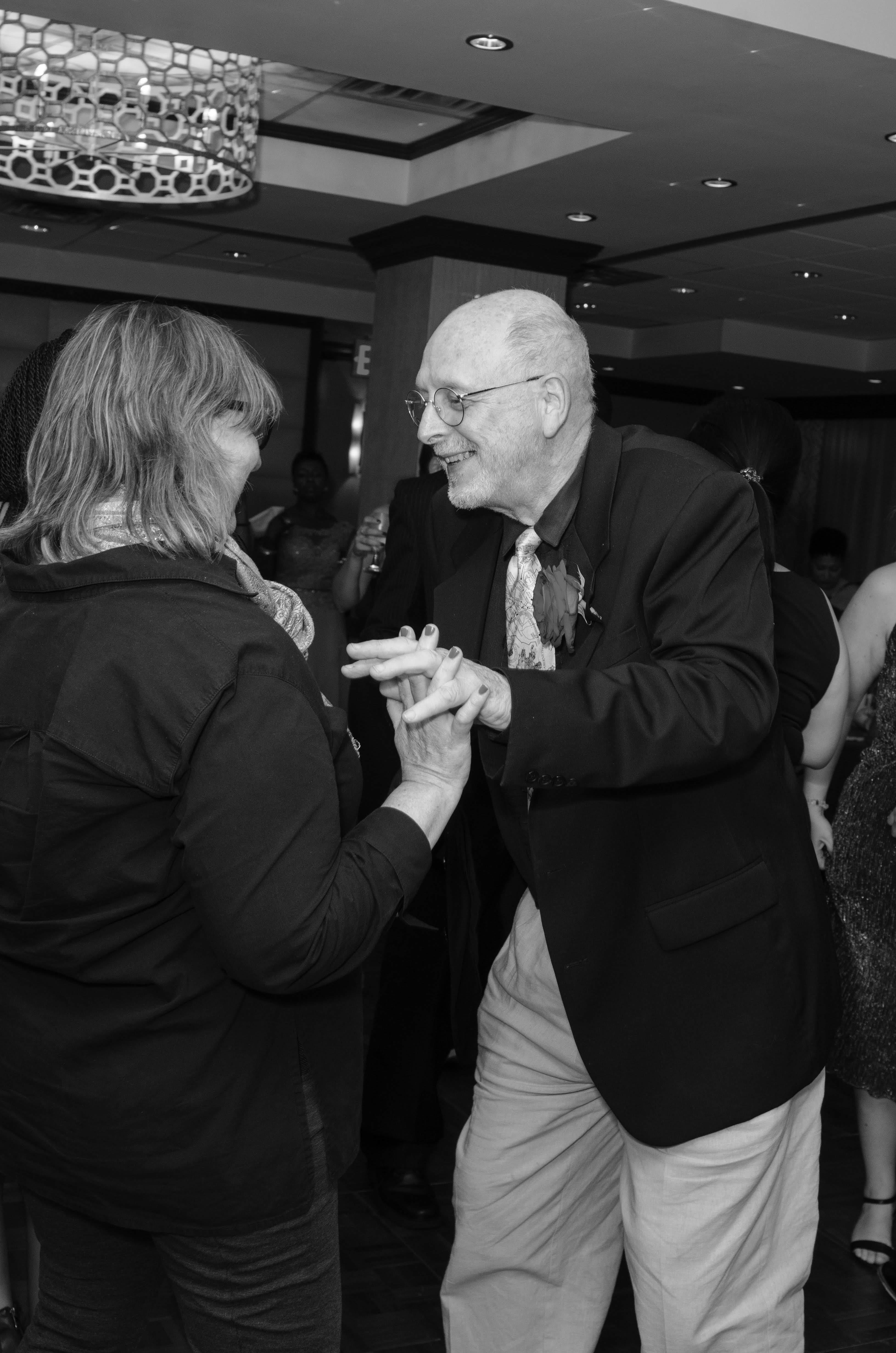
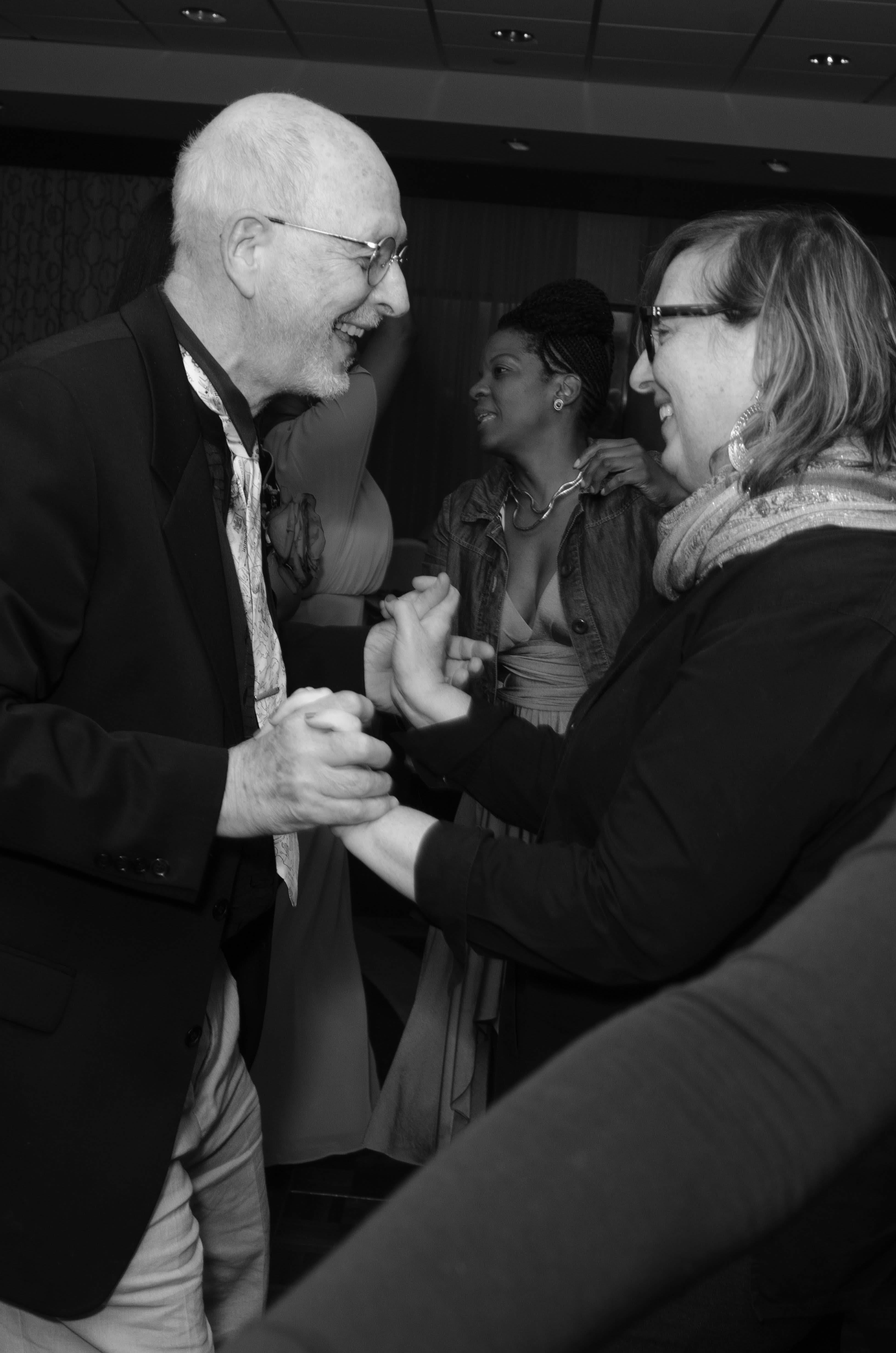
He was a frequent guest at weddings, baby showers, funerals, and milestones of Pace UB alumni. Former students regularly reached out for advice or asked him to work with younger siblings. He rarely said no. When we sent out invitations for Pace UB Alumni Day, one of the biggest draws was simply: Sean Callaway will be there.
Sean and I talked often about how much things had changed since 1998. When Sean noticed that many of his students were struggling to read at grade level, he assigned them Babar the Elephant — using the deceptively cheerful children’s stories as a springboard for discussions about colonialism. He was always finding new ways to meet his students where they were. In 2021, the National Association for College Admission Counseling recognized his career with the Gayle C. Wilson Outstanding Service to the Profession Award.
When my wife and I moved from New York to New Hampshire in 2020, Sean and I started a podcast — conversations with interesting people, recorded over Zoom. We shelved it after he was hospitalized with a prognosis of months to live. Sean proved them wrong, because he wasn’t ready to be done.
Being confined to a wheelchair and tethered to an oxygen machine was deeply hard for him. Losing my New York community was hard for me. We created a standing weekly Sunday Zoom check-in. When white supremacist runners targeted me, Sean was characteristically direct: whatever they claimed, I had done nothing to cause them to choose racism. When my daughter was born and helicoptered to Boston twenty-four hours later for a pediatric cardiology evaluation, Sean checked in on me daily.
When he and Beth moved to Westchester, we visited and introduced them to our daughter.
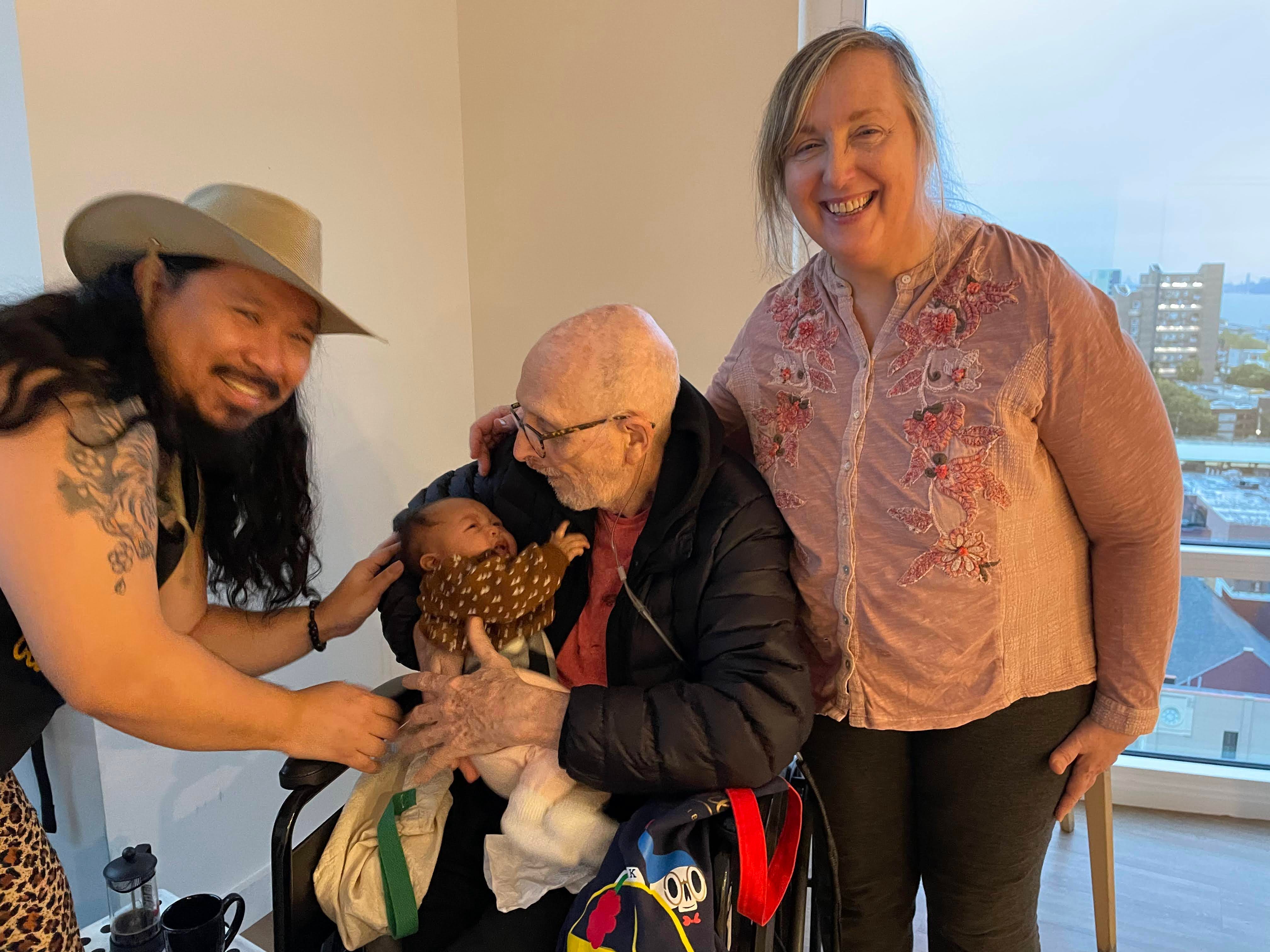
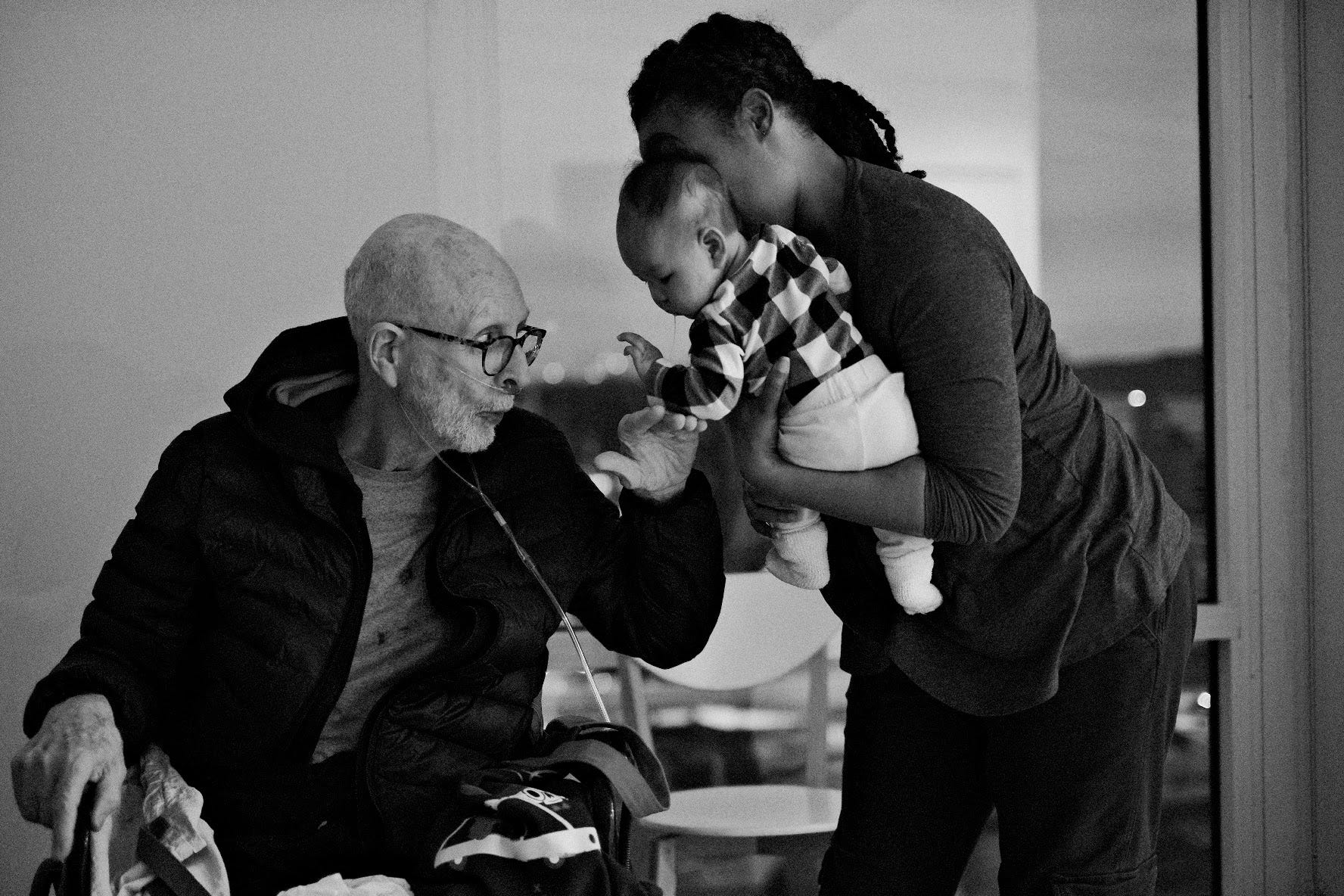
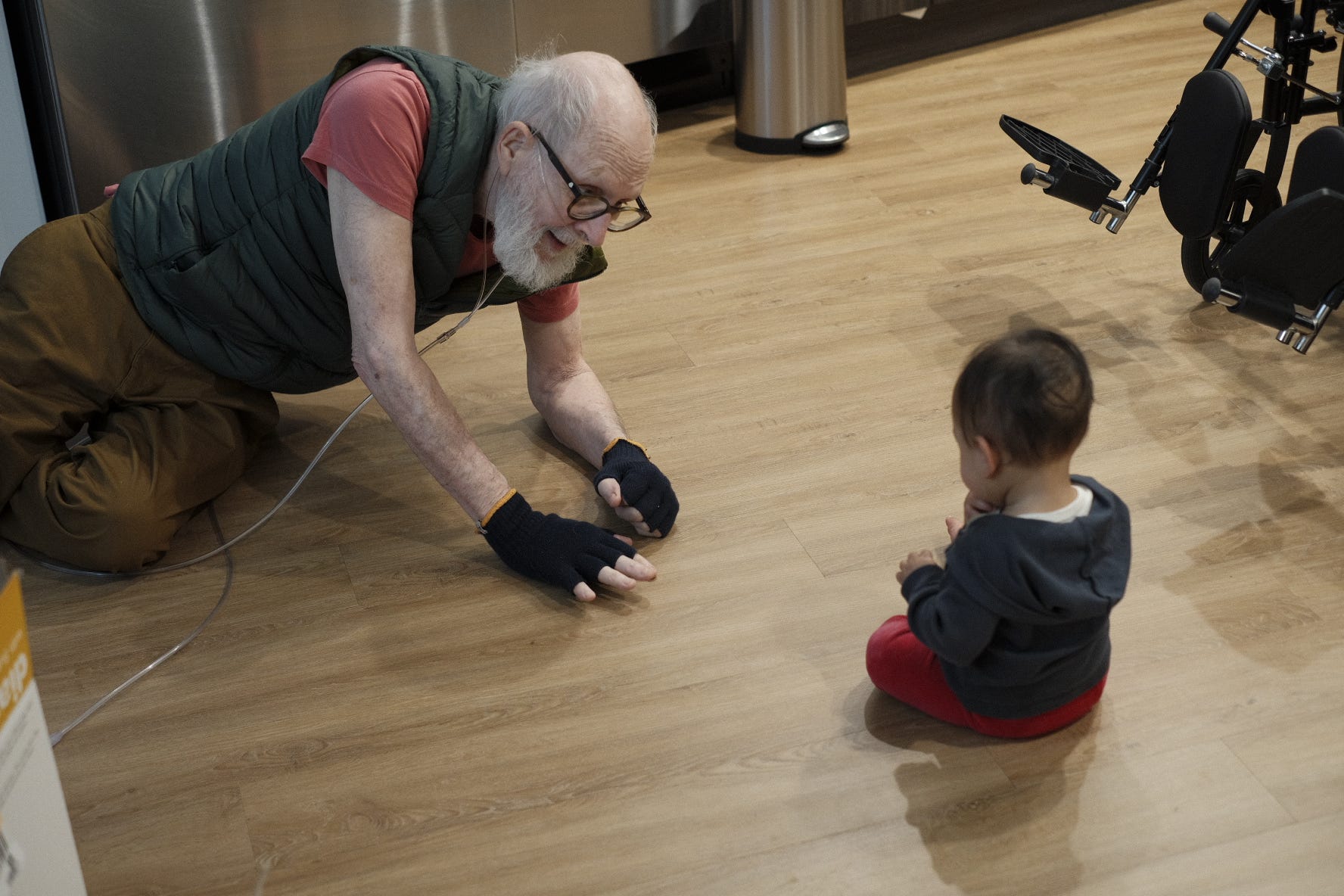
When they moved to Providence, I came to them and we had dinner.
Earlier this year, when Sean and Beth decided to make the trip down to New York for Pace UB Alumni Day, I volunteered to get him from the hotel to Pace. I brought a pastrami sandwich from Katz’s to his hotel room the afternoon before, and we spent hours talking about how much the city had changed since we’d both left. The next day, Sean was in his element — holding court with a long line of former students, each one waiting to spend a few minutes with him. At one point I had to quietly turn off his oxygen machine for a couple of hours because the battery had overheated. He didn’t seem to notice. He kept going until he’d spoken with everyone. Back in his hotel room afterward, he couldn’t stop talking about how good it was to see everybody.
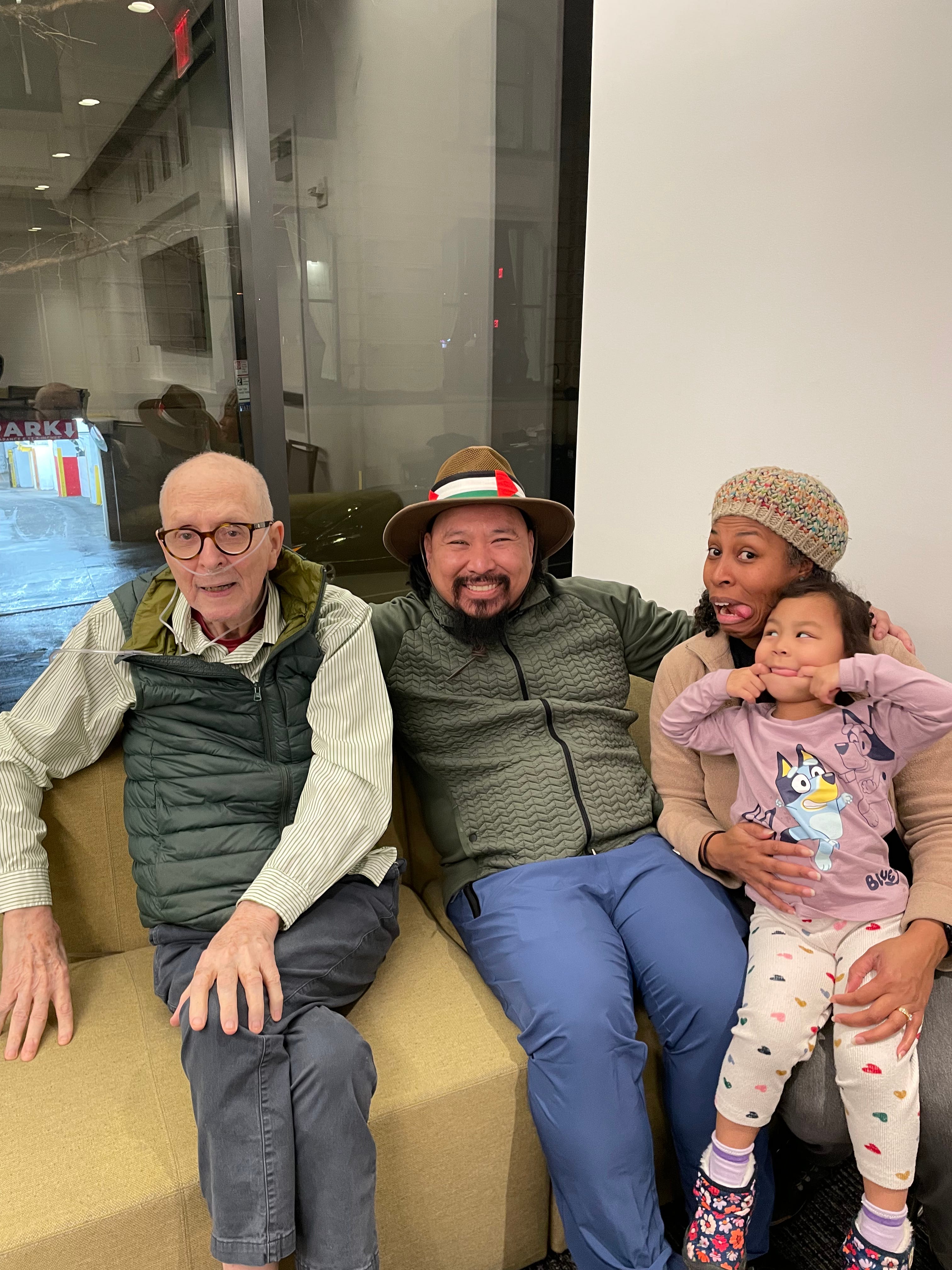
Any tribute to Sean Callaway is, inevitably, partly about the person writing it — because that is the nature of what he did. He inserted himself, with full commitment, into the lives of people who needed someone to fight in their corner, and he stayed. For thirty years, he was present at the inflection points of my life: the brash teenager who needed someone to see past the arrogance, the college student navigating racial violence, the young adult learning to advocate for himself, the new father finding his footing. He was there for hundreds of others in precisely the same way.
Despite being single-handedly responsible for withholding more stipend money from students than any other individual in the history of Pace Upward Bound — and despite attire that could charitably be called hobo chic — Sean Callaway was a true advocate for low-income students. He was one of the best we had, and he brought out the best in us. In his wake, he leaves behind a generation of students and colleagues who will carry forward what he taught us: to fight for dignity, respect, and fairness; to walk through closed doors like we belong; and, when someone needs it, to simply say: I see you.
Thank you, Sean.
Please consider reaching out to Jen Efferen to make a donation to the Sean Callaway Scholarship which is awarded annually to students of the Pace University TRIO Upward Bound Program.
Sounds like a great great man. The push that many of our youth definitely need, I wish I had someone like this in my grasp. I almost started tearing up fam. Rest Well "Sean Callaway"
The lucky ones of our generation all had a "Sean Callaway." It would be a mistake to speak of your friend and mentor in the past tense. He lives on in you, as my "Sean Callaway" lives on in me. As he rests in power, we continue their work to forge the future through our perspective work.